Thursday, February 27, 2014

Impositions on Christians by the jihadis in Syria.

The Islamic State of Iraq and ash-Sham’s dhimmi pact for the Christians of Raqqa province

By Aymenn Jawad Al-Tamimi
Traditionally, a ‘dhimmi’ in Islam is a Jew or Christian who agrees to live under the authority of an Islamic state, agreeing to pay a ‘jizya’ (poll tax) and enduring a number of discriminatory conditions in return for ‘protection’ from the state. The Qur’anic basis for this arrangement is 9:29. In practice of course, the dhimmi pact, far from being a model of historical multiculturalism and tolerance as hailed by Western Islamic apologists such as Karen Armstrong, is actually equivalent to Mafia racketeering, as failure to pay ‘jizya’, whose financial burdens often proved heavy historically, leads to a loss of ‘protection’ by the state.
For the Islamic State of Iraq and ash-Sham (ISIS), which has the backing of broad elements of classical Islamic theology in this regard, such a development comes as no surprise, as the group’s predecessors- Islamic State of Iraq (ISI) and al-Qa’ida in Iraq- similarly imposed jizya on Christians both in the Baghdad area (al-Dura neighborhood) and the north of the country. In Syria, the group has already imposed dhimmi terms in practice on Christians in Raqqa province, such as in Tel Abyad, where supposed violation of the dhimmi pact was the pretext for ISIS’ desecration of the Armenian church in the fall of last year.
One should also note that this pact has been imposed by ISIS’ leader Abu Bakr al-Baghdadi and bears his signature as the amir al-mu’mineen (“Commander of the Faithful”- the traditional title of a Caliph, illustrating how ISIS is aiming to build the Caliphate and is projecting its leader as the future Caliph). It would thus indicate that Baghdadi is likely to be in Raqqa province at the moment.
Indeed, such a conclusion on Baghdadi’s location is quite logical, for I would also note how my ISIS contacts within Raqqa province have been referring to Raqqa city in particular as ISIS’ ‘capital’ since ISIS took over the city and most of the rest of the province, with the exception of a Kurdish enclave just west of Tel Abyad and two regime airbases (Brigade 17 and Tabqa military airport). Meanwhile, Liwa Thuwar al-Raqqa, FSA-banner groupings, and some Jabhat al-Nusra continue to wage an underground insurgency with sabotage attacks (which are also happening in other ISIS strongholds such as Manbij in Aleppo province), and an underground regime presence, which has existed since Raqqa province largely fell into rebel hands, is beginning to flaunt its presence in the city of Raqqa, for a Raqqa branch of the National Defence Force (NDF) has recently been proclaimed, giving news of raisings of regime flags and displays of pro-Assad graffiti in Raqqa.
BhGTVQuCYAALSID
Figure 1: Regime flag recently put up in Raqqa city.
Here is my preliminary translation of the relevant excerpts of the first formal dhimmi pact:
“In the name of God, the Compassionate, the Merciful:
Text of the pact of security the Islamic State has given to the Christians of Raqqa with their embracing the rulings of dhimma.
Fight those who believe not in God, nor the Last Day, nor in what God and His messenger have forbidden, nor adopt the true religion [Islam], [even if they be] from the People of the Book [Jews and Christians], until they pay jizya with the hand, and feel themselves subdued- Qur’an 9:29.
We bear witness that there is no deity but God alone. He has fulfilled his promise. He has given victory to His servant. He has made mighty His soldiers. He has defeated the parties on His own: there is no deity but God whom we worship, having purified religion for Him even if the kuffar hate it.
And we bear witness that Muhammad is His servant and messenger- may God’s peace and blessings be upon him…and we bear witness that Jesus the son of Mary is God’s servant and His messenger…the Almighty has said: ‘Never would the Messiah disdain to be God’s servant, and nor would the Angels who are near, and whosoever disdains to worship Him and is haughty- He will gather them to Himself together’- Qur’an 4:172.
[...]
And for what follows: This is what the servant of God- Abu Bakr al-Baghdadi, the Commander of the Faithful [NB: this is the title of a Caliph] has given to the Christians concerning the pact of protection. He has given them security for themselves, their wealth, their churches and the rest of their property in the province of Raqqa: their churches should not be attacked, nor should anything be taken [by force] from them, nor from their domain, nor anything from their wealth, and there should be no compulsion against them in religion, and none of them should be harmed.
He has imposed these conditions on them:
1. That they must not build in their town or the periphery a monastery, church or monk’s hermitage, and must not rebuild what has fallen into disrepair.
2. That they must not show the cross or any of their scriptures in any of the roads or markets of the Muslims and they must not use any means to amplify their voices during their calls to prayers or similarly for the rest of their acts of worship.
3. That they must not make Muslims hear recital of their scriptures or the sounds of their bells, even if they strike them within their churches.
4. That they must not engage in any acts of hostility against the Islamic State, like giving housing to spies and those wanted for a reason by the Islamic State, or whosoever’s brigandery is proven from among the Christians or others, they must not aid such persons in concealing or moving them or other such things. If they know of a conspiracy againt the Muslims, they must inform them about it.
5. That they must not engage in any displays of worship outside the churches.
6. That they must not stop any of the Christians from embracing Islam if he so wishes.
7. That they must respect Islam and Muslims, and not disparage their religion in any way.
8. The Christians must embrace payment of the jizya at every mention upon them: its value is 4 dinars of gold…on the Ahl al-Ghina [the wealthy], and half that value on those of middle income, and half that on the poor among them, on condition that they do not conceal anything from us regarding their state of affairs. And they are to make two payments per year.
9. They are not allowed to bear arms.
10. They are not to deal in selling pork and wine with Muslims or in their markets; and they are not to consume these things publicly- that is, in any public places.
11. They should have their own tombs, as is custom.
12. That they must accept the precepts imposed by the Islamic State like modesty of dress, selling, buying and other things.
[...]
So for them is nearness to God and the dhimma of Muhammad, the Prophet and Messenger of God- may God’s peace and blessings be upon him- even as God brings his command: what they have embraced in the conditions outlined in this document.
But if they disagree with anything in this pact, then they have no dhimma, and the Islamic State of Iraq and ash-Sham will deal with them as it deals with the people of war and stubborn enmity.”
Update: After the implementation of this dhimmi pact in Raqqa province, the practice looks set to spread to Hasakah province (Wilayat al-Baraka in ISIS terminology), where ISIS is the dominant force in rebel-held areas. A Twitter account associated with ISIS news from Hasakah province- @barakah53731284- says “After Raqqa province, Christians from Baraka province offer to pay jizya and the Islamic State postpones their matter until it can be made completely possible with a guarantee of being able to implement the dhimmi pact.”
Screen Shot 2014-02-26 at 17.34.39

Update 2: In case ISIS’ ambitions to a global caliphate were still not apparent to anyone, ISIS’ official Twitter account for Raqqa province had this to say on the imposition of the dhimmi pact: “Today in Raqqa and tomorrow in Rome.” Rome is traditionally seen as the Christians’ global capital.
Screen Shot 2014-02-26 at 19.20.07

Sunday, February 02, 2014

Biased news reporting and propaganda

It is now 3 years since the conflict in Syria began and I am not sick and tired of reading and seeing and hearing the skewed reports of what has been gong on there. Before this conflict broke out the EU and other western governments were saying in Damascus how much progress Bashar Al-Assad was making in modernising certain aspects of Syrian society. At the same time there was a noticeable build-up of so-called "press" and "cultural" people with embassy affiliations, notably to the US embassy.

It is worth remembering here that Syria was the only non-confessional state in the region and that the Sunni majority lived peacefully alongside their Shia, Alawite, Ismaili, Druze and Christian neighbours.

Now the country is torn apart notably by interventions from outside i.e. Saudi Arabia (Al-Qaeda) and Qatar (Moslem brotherhood) who are fighting their own proxy war on Syrian soil. Turkey is also exploiting the situation   to its own ends They have turned the country into a terrorist camp where they are training terrorists with many thousands brought in from outside i.e. Britain, France, Belgium, Scandinavia, Libya, Egypt, Tunisia and anywhere else where there are hotheads ready to plunge themselves and their families into violence and hatred.

The US plays a great role in all this and over the past decade or more they have been recruiting people to further their cause.  The Syrian participants in this conflict are mainly people who have their own agenda and are prepared to take up foreign offers if that will get them where they want to be.

What is abundantly clear to anyone who knows anything about the region is that, despite all its flaws, the current Syrian regime under Bashar Al-Assad , who was after all elected by the people, is the only one that can guarantee the rights of the minorities in the country. What would take its place does not bear thinking about as we can see from the terrorist held areas enforcing Sharia law in the terrorist.

When US representatives e.g. Obama and Kerry make statements about democracy and other professed aims, the very last thing they are taking into account is the welfare and wellbeing of the people of Syria and they should certainly take a look at their own domestic situation before making pronouncements about how others should govern their lives. They might also consider the domestic situation of their allies i.e. Saudia Arabia and Qatar which cannot be regarded as democratic by any stretch of even gthe most overheated imagination. 

The international media are their "Master's Voice" "reporting" on the situation in totally skewed terms and with a complete lack of analysis. I for one am tired of skewed, biased and uninformed (if we are to be generous) reporting or propaganda machines (if we believe that the press is simply another weapon in the war serving the interests of those fanning the flames).

Syria was an increasingly prosperous country before this proxy war began, but the task of rconstruction, when the times comes for it, will be an arduous and expensive one.  Even if we look at this conflict only from the perspective of environmental  destruction it is a totally reprehensible state of affairs.

Friday, November 03, 2006

On the road, Syria

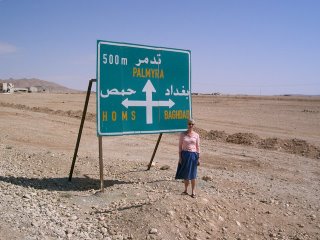
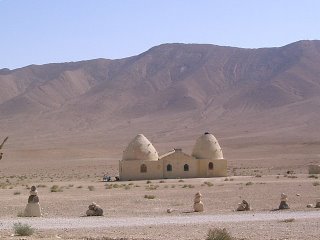
Road to Palmyra


Baghdad Café on road to Palmyra!

Posted by Picasa

Photos Sednaya

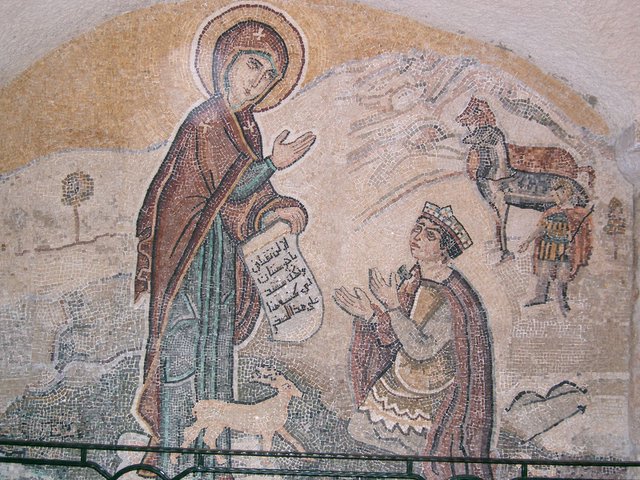
Mosaics Shrine Sednaya


Niches in rock below shrine Sednaya


Posted by Picasa

Photos Shahba

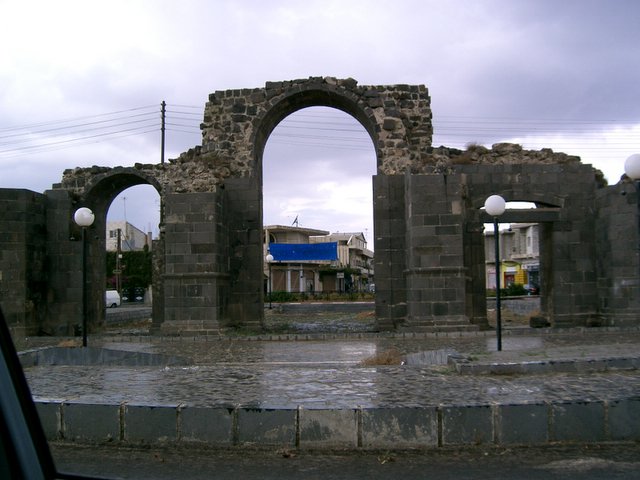
Arch Shahba


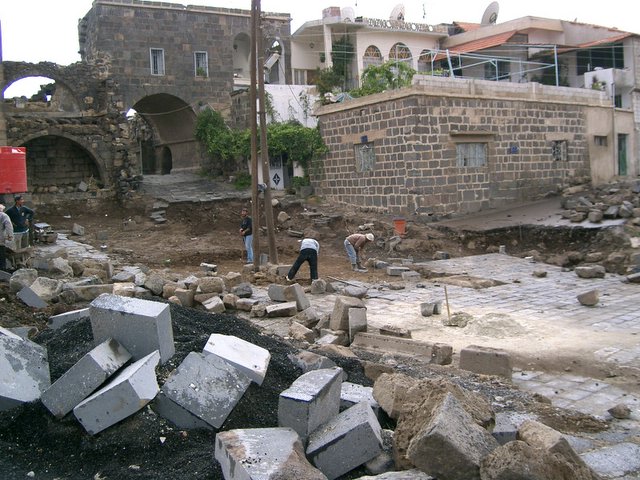
Official vandals tearing up Roman paving


Roman baths, Shahba


Posted by Picasa

Photos Izra'a

Greek Orthodox Church of St. George, Izra'a


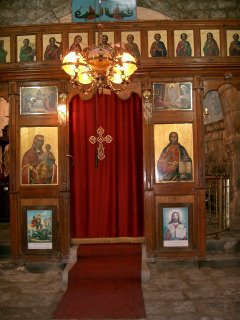
Detail iconostasis, Church of St. George, Izra'a
Abu & Um Yusuf
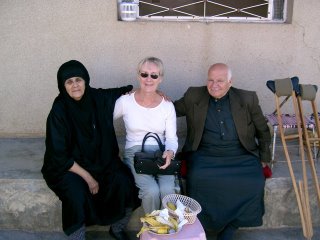
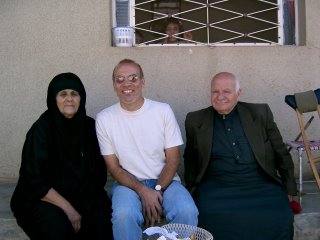
Robert with Abu & Um Yusuf Posted by Picasa

Photos Palmyra

Colonnaded axis


Temple of Baal-Shaman


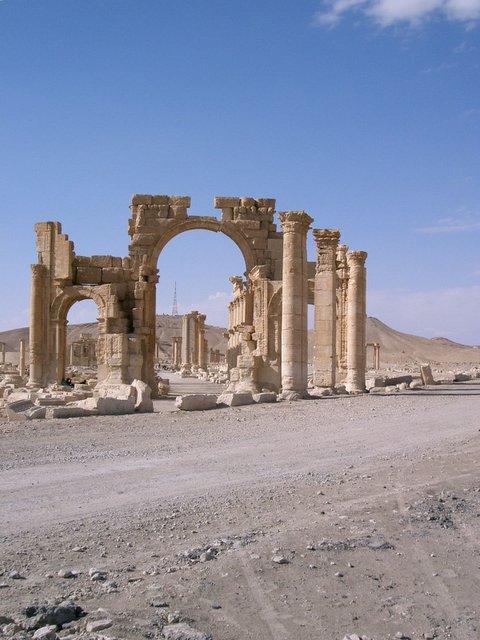
Triumphal Arch, Palmyra


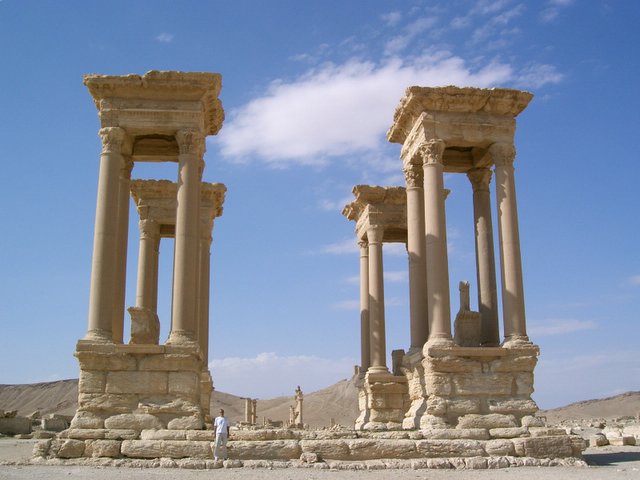
Tetrapylon, Palmyra

Posted by Picasa

Photos Bab Sharqi

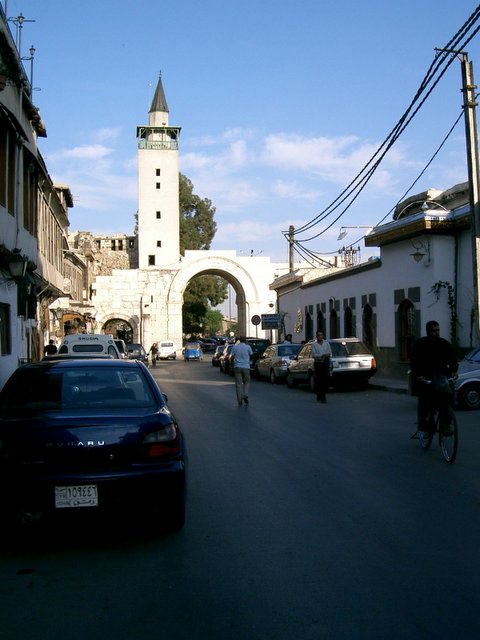
Bab Sharqi


Street in Bab Sharqi

Posted by Picasa

Damascus

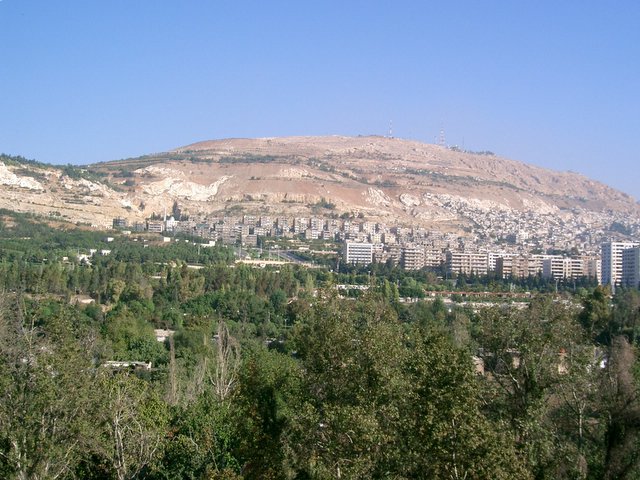
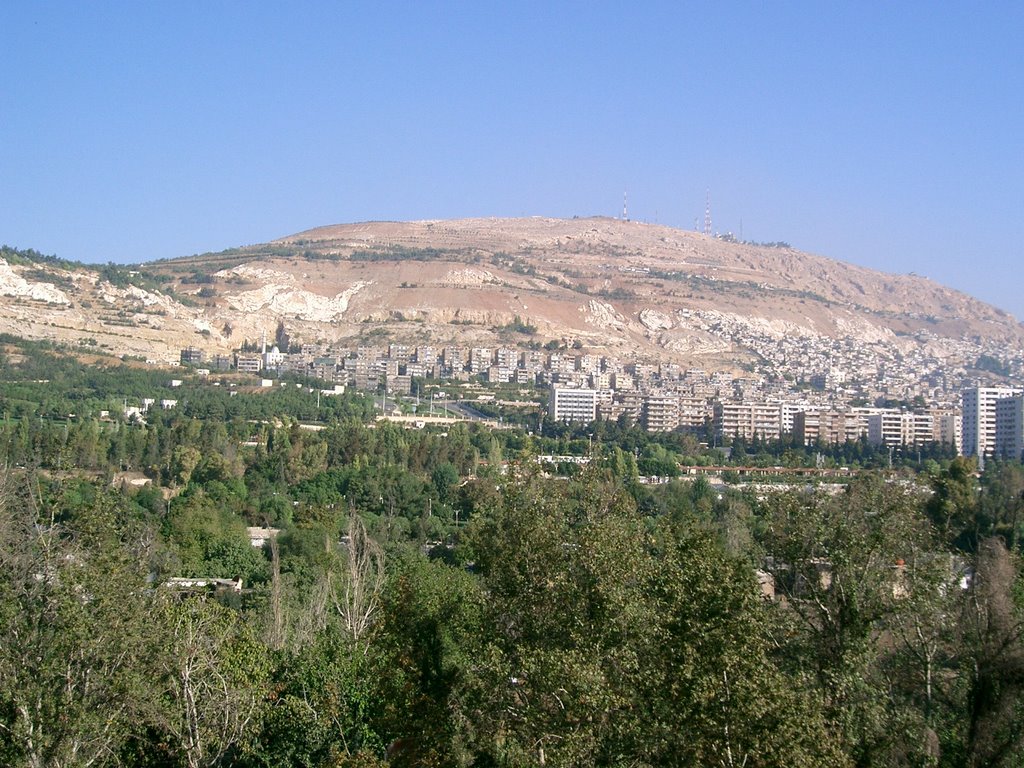
Mount Qassioun


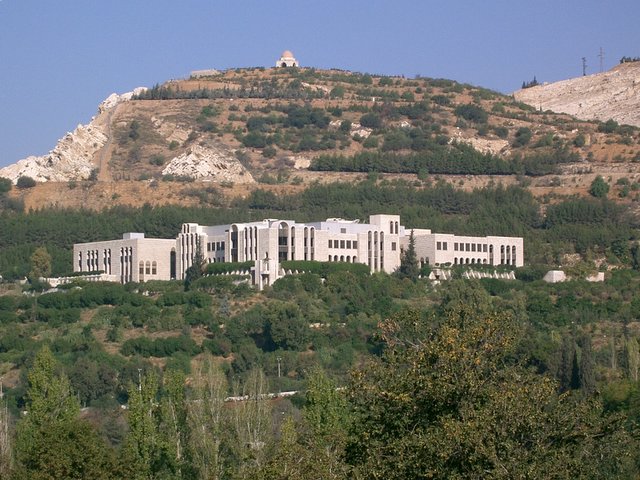
Presidential Palace

Posted by Picasa

Syria revisited

Syria revisited

October 2006

It was seven years since I last visited Syria, so I was interested to see how things might have changed in the interim in view of the upheavals in the region and the inexorable advance of Islamic fundamentalism.

Differences in experience were apparent from the time the plane landed at Damascus airport at 2 a.m. When I arrived in 1998 accompanied by our dog, Simon, and two cats, official oil smoothed the whole immigration procedure and I was whisked through painlessly (See http://marysyria.blogspot.com/ The Road to Damascus posted under August 2005). This time I followed normal procedure like everyone else. However, the modernisation of the airport installations and greater organisation made this a less formidable task than it might have been seven years ago. There is a clearly signposted desk where visa payments must be made before proceeding through immigration. The worst part of that experience was trying to avoid being sent to the back of the queue by all the impertinent men, mostly Iraqi, who seemed to believe that it is their God-given right to stand at the head of the queue come what may, particularly if the person already there is a a women. This jolted my extremely rusty Arabic into action to assert my rights as first in the queue. I don’t know whether it was the surprise of having a fair-skinned woman utter any words at all in Arabic or the fact that a woman of any description would dare to defend her position. Anyhow, it worked.

Fortunately immigration procedure was not too lengthy as at that ungodly hour nobody feels too inclined to stand in long queues for any longer than necessary. My visa invitation letter was satisfactory and I was allowed to pass through. The luggage was already unloaded so there was no waiting there. Robert was waiting for me the in the arrivals hall and we went straight to the house.

Sleep was shortly interrupted. At 4 a.m. the nearby mosque set up its raucous call to Friday morning prayers which lasted for a long time. The mosque is a small one but it certainly has a powerful loudspeaker system!

Damascus revisited

The first day of my visit was spent revisiting the haunts that I had frequented during my previous stay – Malki, Abou Roumaneh, the now rapidly expanding residential district of Dumar, Mezzeh, a drive up Mount Qassioun followed by lunch at Gemini in the heart of the city. Reproachful eyes looked at the non-Moslem diners through the windows of the restaurant.

As darkness falls early, around 5p.m., we returned home. The house Robert is renting is a fairly new building near the Mohajrin Hospital area. It is a rather uninviting neighbourhood which we had never liked when we lived there before so I cannot imagine what possessed him to rent there. The area around the hospitals was always teeming with people, particularly mothers with small children and many people squatting on the pavements outside. It has not changed much although there were fewer people on the streets perhaps due to the fact that it was ramadan. The apartment is furnished with the overstuffed seats beloved, it would appear, in all Middle Eastern and Arab countries. So two burgundy chaise longues and several chairs provide the wholly uncomfortable seating. Opposite the house is a patch of spare ground with rubbish containers. The denizens of the district are mostly conservative and the most attractive feature of the place are the cats who have become used to being fed from time to time. The cats in Damascus are not the lean-faced Egyptian variety but have round faces recalling the conformation of Persian cats. With the start of Eid the cats' existence was to find a new menace. The most popular Eid gift for boys this year seems to be a laser gun (In previous years I recall air guns and guns with powder crackers being all the rage) and the cats were the chosen target for persecution. The other saving grace is the view from the sitting-room window which faces in the opposite direction (east) and provides an open aspect of Mount Qassioun and the presidential palace.

On Saturday morning we got up at 6a.m. – no sacrifice as day dawns early here – and drove up to Mount Qassioun for an early morning walk. Robert has a 6km. circuit which took us one hour to complete. The mountain is much as it was before, with its roadside cafés which, even at this early hour of the day, were playing music to attract the last lingering ramadan revellers. Some cars were parked with couples in them, which might seem surprising as most of the girls were “covered”. So how do they justify being out all night? Others were being driven fast and noisily by groups of young men. The other feature which has not changed is the rubbish. It is still lying thick on the ground and grew ever more abundant over the course of the next few days as more and more people spent time on the mountain consuming large quantities of pizzas and other foods with throwaway wrappers during the celebration of Eid al-fitr which closes ramadan. The feral dogs forage for food in the early morning when human presence is at its lowest ebb and one dog which is kept as a guard spends its entire life tied up in a cave opposite one of the pavement restaurants.

Deir Mar Musa: http://www.deirmarmusa.org/

After breakfast we set off for Deir Mar Musa some 81 km. north of Damascus. This is a place that I had not visited before. Deir Mar Musa is a monastery set high in the rock face in the desert. The monastery was founded in the sixth century A.D. by Mar Musa (St. Moses), an Ethiopian saint revered in the Syrian rite. The early monastic community lived in caves in the hillside and the small church with frescoes dating from around the 7th century has been restored due to the efforts of an Italian Jesuit priest, Padre Paolo, who has revived the site. There are now six monks and two nuns although both nuns are currently studying sociology in Italy. There is now a residential wing reached by a hanging bridge where people may spent the night or take part in retreats.

The usual silence of the place was being raucously interrupted by the shouts of the workmen engaged in expanding the residential quarters. All the building materials and other day to day supplies are hoisted up to the the monastery by means of a kind of rope lift. The monks were busy preparing for the onset of winter, cleaning and polishing stoves. There is no question that winter in this unforgiving environment must be harsh indeed. The view over the desert from the little terrace is breathtaking and I should love to return one day when the building work is completed to enjoy the silence and perhaps even spend a night there.

While we were there a TV crew was filming in the little church.

The monks received us kindly and served us tea.

Ma’alula revisted (See http:marysyria.blogspot.com Ma’alula posted under September 2005)

Leaving Deir Mar Musa we set off for Ma’alula, the Christian village where Aramaic is still spoken which we often used to visit. We returned to the cavern of Mar Taqla and walked through the spectacular defile. Things are much the same, although a large new mosque has been built at the entrance to the village. This would seem to follow the pattern evident throughout the country where mosques are proliferating at a tremendous rate.

We had arranged to meet Shaam, her husband Tarafa and baby daughter Leana at 5 o’clock in the Sahara restaurant for iftar, the meal which breaks the fast at sunset. It was a pleasant interlude and a chance to catch up on events in their lives.

Sunday is a normal working day so Robert left me at the Méridien Hotel on his way to work. From there I walked to the Souq al-Hamidiyeh and the Ommeyad Mosque (See: http://marysyria.blogspot.com/ The Great Mosque of the Ummeyads posted under December 2005) where I had hoped to take some photos of the mosaics for Annabel, my art teacher. However, the mosque did not open to the public till 10 a.m. so I did not wait. One thing drew my attention and that is that the souq and surrounding area seemed cleaner than before (at least at that early hour) and a Kärcher machine was being used to sweep the streets. Could it be that the president’s medical background is having an impact on municipal cleansing policy?

As I walked to the souq I counted the number of women not wearing the hijab. Only three! On the return journey and as I sat having coffee at the hotel and looking out the picture windows, I counted nine. This is surely a turnaround from seven years ago. To be sure mujhabat, or “cover ladies” as they were called, did abound but never to that extent. Also there were many more women wearing face veils and gloves. Not an encouraging sign for women’s rights by any stretch of the imagination! Many more men wearing the “fundamentalist uniform” of half-mast gowns are also to be seen on the streets.

After having coffee with Shaam, Robert and I went in search of a very good bookshop that I used to frequent where they sold books on a huge variety of topics, including orthodox christianity. Unfortunately the shop is now closed and building work was going on inside. A shame. I had hoped to find some interesting reading matter there.

After that we went to Bab Touma, or the Gate of (St.) Thomas. This is the heart of the Christian area of Damascus (See http://marysyria.blogspot.com/ The Street called Straight posted under September 2005). As we ate lunch at Steed, it was interesting to feel the difference in atmosphere in this part of town. There were even people out walking their dogs, a site which would be unthinkable in the rest of the city. After lunch we went to Bab Sharqi, the Eastern Gate which marks the entrance to the old Roman city. This is also the Christian district of the old city. A poster announced a tantalising concert of ancient religious music in the Syriac rite but, unfortunately, it was to be held on the Sunday evening when I would already have left. A disappointment.

Palmyra See http://marysyria.blogspot.com/ The Ruin Fields of Palmyra posted under September 2005)

Eid was scheduled to begin on Monday, October 23rd. We had made a reservation at the Tetrapylon Hotel in Tadmor, the village next to Palmyra, and set off after an early morning walk on Mount Qassioun. However, when we arrived in Palmyra and Robert called George for more specific instructions about how to find the hotel, he was informed that Eid had been postponed till the following day because the imam charged with the task had not sighted the new moon. A problem, because this meant that Robert should actually have been at work. However, a few more phone calls resolved that issue and we could continue with our programme.

The point which arises is how can it be that in the twenty-first century the use of a telescope or astronomical calculations are inadmissible in the declaration of a holiday? Only the visual sighting of the new moon is acceptable. The Syrian imam responsible for the sighting did not see the new moon on the evening of the 22nd., so Eid was postponed. In Saudi Arabia, France, Egypt and, it would appear, most other places, however, the moon was sighted so Eid began on Monday as planned. How can a country make progress when such a simple thing becomes an issue?

In the end we opted to stay at the Heliopolis Hotel where the rooms were more ample and had a view over the oasis and the ruins of Palmyra. We had lunch at an open-air restaurant near the Zenobia Hotel. For a small plate of mezzeh we were charged the astronomical sum of 800 Syrian pounds or €12. On the subject of hotels, I still believe that, although the Zenobia may be a bit run down, no other hotel can match its location overlooking the ruins of Palmyra and right next door to the beautiful little temple of Baal-Shaman. When you stay there you are hardly aware of the existence of the modern village.

In the afternoon we visited the spectacular ruins of Palmyra once again. The bedouin are encroaching on the site and a hippodrome has been built in the vicinity, all of which bodes ill for the ruin fields. The ever-increasing bedouin presence would appear to form part of some “colonising” plan as they proliferate everywhere. And proliferate they do with their huge families. One such tried to entice Robert to buy a necklace for me. He insisted that he needed the money to buy gifts for Eid for his seven children! What would the price of the necklace have been, I wonder?! To give him his due he did laugh at his own “sales patter” when he realised that we were no strangers to the region.

Then we drove up to Qala’at Ibn Musa, the Arab citadel which perches on the cliff on the far side of the ruin fields. The inside of the citadel has been “restored” and an official desk selling tickets now stands at the entrance where Mohammed sat with this kuffiyeh when we last visited. Signs of the times.

Eid

Not much sleep was had that night. At 2 a.m. the mosques began their call to prayer announcing the arrival of Eid.

Allahu Akhbar x 3
Short pause
Yallah

Then the faithful repeated the same incantation.
Next phase.

Allahu Akhbar x2
Short pause.
Ila al Haqq.

Once again this was repeated by the faithful.

And so it went on from 2 a.am.till 7 a.m. Variety is evidently not the spice of life here.

At 7 o’clock we left the hotel to climb up to the citadel in the cool of the morning. Once there, I tried to sketch the panorama looking down over the Valley of Tombs and the ridge beyond. Far from the village the desert casts its spell.

After breakfast on the fifth floor restaurant of the hotel we opted to return to Damascus. It began to rain so the decision was a wise one. In the afternoon we went to the Sham City Center, a shopping centre which has sprung up since my previous stay in the country.

As evening fell, thunder claps announced an approaching storm.

Wedneday began once again with an early morning walk on Mount Qassioun. After that we headed south towards the Hauran and Izra’a, another village that we used to visit when I was here before.

Izra’a (See http://marysyria.blogspot.com/ Izraa posted under December 2005)

Our first stop in Izra’a was the home of Abu and Um Yusuf. Abu Yusuf was the Greek Orthodox priest at the Church of St. George. He is now retired and unfortunately we found him walking with the aid of crutches as he had injured his hip in a fall a year earlier in Beirut. Like many people who suffer such falls, he had succumbed to the idea that the only thing to do was sit around with the result that healing was slow. He was pleased to see us and we ate some fruit with him and his wife before setting off to some excavations which are being down just down the street.

Then we visited the church once again. The church at Izra’a, which dates from the around 630 A.D. is the longest continuously used Christian church in Syria. It is remarkable as one of the earliest examples of a basilica constructed on an octogon-within-a-square plan. We found the basalt building to be nicely kept and it was a good experience to stand inside it once again.

Shahba (See http://marysyria.blogspot.com/ Shahba posted under September 2005)

After buying some fruit and vegetables we took the road to Shahba where, once again, we came across tortoises crossing the road. The same thing had happened when we took this road years earlier. This time we also assisted them across the road to keep them out of harm’s way. It began to rain then.

Shahba, the Roman town which was the birthplace of the Roman Emperor Philip the Arab, is more or less as it was before, although official vandalism is all too evident as workmen dig up the Roman paving to lay pipes and then, instead of replacing the original stones, lay regular, machine-cut stones with the odd original stone as a token. Goodbye Roman road! I doubt whether the modern equivalent will resist two thousand years of wear and tear.

A magnificent rainbow arched the sky as we left Shahba.

As he had not been to work on Monday, Robert went into the office on Thursday to make up the time. Having the place to himself proved useful as he was able to make much better progress with his work plan than he might otherwise have done had there been other people around causing interruptions. I took the opportunity to have my legs waxed at the Méridien where the same lady from St. Petersburg that I knew from before still runs the salon.

After lunch we went to the Swiss House. I did not know this restaurant on the outskirts of the city. The building is a wooden Swiss Chalet but the most interesting and attractive aspect is the beautiful garden surrounding the restaurant which has ponds and wooden bridges and a great variety of trees, shrubs and other plants. The question arises: if this man can have such a beautiful garden, why can other people not do the same? It certainly makes a world of difference to the atmosphere.

Then we visited the Zarzar lake area which was more “manicured” than it was when we took Simon to walk there and he ended up covered in burrs. This, I suppose, is a direct result of the real estate and leisure boom which is under way there. Many homes are being built and there are real estate projects such as the Yafour Residential estate. A mixed blessing, I suppose.

A quick trip to the Lebanese border showed a tremendous change. In former times the border area was a bustling hub with hundreds of cars, buses and other vehicles and people milling around everywhere. Now, in the aftermath of the invasion of Lebanon, only a handful of vehicles were attempting to cross. Most of the shops are closed and not a soul was to be seen. Most of the traffic is Lebanese coming into Syria to spend the day but traffic in the opposite direction is almost nil.

Friday again and the weekend begins.

Sednaya See http://marysyria.blogspot.com/ Ma’alula posted under September 2005

After having coffee at the In-house Coffee shop we headed for the Lady Shrine at Sednaya. This Greek Orthodox convent and orphanage dedicated to Our Lady sits atop the village on a rocky outcrop. The little chapel, its walls covered with icons of every era, is charming and intimate. The shrine is visited by many people, and on this day it was thronged with people who had come, each for his or her own special reason – parents who wanted their children to be blessed, people asking for the health of their families and many other reasons. A black-habited nun stands in the centre of the little church. In her notebook she writes down the individual requests and says a prayer aloud naming each one individually. People kneel fervently before the central icon and express their own private devotion. It is a womb-like place and a healing experience.

In the afternoon we met a gentleman who was interested in exploring possible projects for a newly acquired piece of land. Perhaps fresh flowers or essential oil of Damask rose? Who knows what the future will bring!

Evening brought another thunder storm and the lightning outside was mirrored by inside lightning as the fuse box blew and sparked.

My visit was over.

For more information on Syria visit http://www.musicsyria.com/


Saturday, August 05, 2006

Bald Ibis

For those concerned about the natural environment, this website may be of interest.

http://www.rspb.org.uk/tracking/northern_bald_ibis.asp

Thursday, July 27, 2006

BIMARISTAN NUR ADDIN

BIMARISTAN NUR AD-DIN

We had been there before but it was on a Friday and the place was closed. This time, as we walked up the street - the fifth on the right walking up the souq al-Hamidiya towards the Great Mosque, things looked no more promising as we could see workmen digging up the entrance. However, the door was open so we went inside.

The word bimaristan comes from the Persian and is made up of two separate words, mar which means sick person or patient and stan which means home or homeland (as in Pakistan etc.). So bimarstans were homes for (bi) sick people, that is hospitals or healing centres. The Bimaristan Nur ad-Din was founded as a hospital and medical teaching centre in 1154 when Nur ad-Din, Saladin’s uncle, added Damascus to his conquests, more by charm than by arms it is said, and for centuries it was the most renowned medical institution in the Orient. It continued to function as a hospital until the nineteenth century when the National Hospital was built in Damascus, and a picture of the last graduates from the centre in 1921-22 is displayed in the building which was turned into the Museum of Arab Medicine and Science in 1978.

To the right of the entrance is a room which I am glad we saw first, because my heart sank as I entered it to find a collection of stuffed birds and animals of every kind. The ignominy of seeing a grey fox, with mothballs in its ears and mouth, standing up on its hind legs, wearing a waistcoat and red bow tie and proferring a basket was just too much to bear. Fortunately, the rest of the museum was fascinating enough to mitigate the outrage I felt there.

The entrance gives way to the typical inner courtyard with a fountain and trees casting their shade. Opposite the entrance door is the main iwan which is where teaching used to take place, the teacher seated before his students who sat on cushions at his feet. The teaching method involved the teacher explaining the topic to the students whose questions were clarified during the ensuing discussioin. They then memorized the texts of the great medical authorities.

Arab medicine and science flourished at a time when Europe was largely ignorant of such matters. The texts of Greek and Roman antiquity had been lost in Europe but they were known and translated into Arabic by the learned men of the day who added their own contributions to this corpus of knowledge. Spain, as part of the Islamic world of the Middle Ages, was party to this tradition and it was largely through such contacts that the Renaissance was to occur.

The museum is small but the amount of information it contains is quite impressive. One of the rooms is the pharmacy and here there are several showcases with samples of the herbs, plants and minerals which formed the basis of Arab medicine accompanied by a summary of the main properties of each. There are also extracts from the works of of Ibn Sina or Avicenna as he is known in the West, one of the great figures of his age whose work is the link with the modern application of such knowledge in the form of aromatherapy and sound therapy. The methods of treatment used in the bimaristans involved examining patients, taking their pulse and urine samples and recording their symptoms. On the basis of the diagnosis a holistic treatment was prescribed which, as well as medicines in the form of pills, ointments and so on, also included dietary recommendations, vapour inhalations and other treatments. Mental patients were also attended to, and one of the primary features of treatment in this area was the use of music and sound to influence the mental state of the patient. The treatment of mentally ill patients was based on five pillars:
  1. sunlight

  2. fresh air

  3. the sound of water – so there were fountains n the courtyard

  4. the colour blue which Western knowledge now acknowledges as having a calming effect

  5. music.

One of the exhibits in the pharmacy is a botanical notebook belonging to Ibn Al-Baytar who lived from 1197 to 1248 and was one of the foremost botanists and pharmacists of his day. The botanical drawings are quite delicate. The pages of one book show coloured illustrations of the two methods used to make rose water, one using steam and the other using hot air. Alongside the drawings is a copper still used to extract plant essences for medical purposes. Also to be seen are works of Al-Farabi (872-950) who was a great philosopher and musician.

The medical consulting room houses a reconstruction of what it would have been like to receive medical attention in the bimaristan. The patient is lying on a couch in the middle of the room and the doctors surrounding him are taking his pulse and recording his symptoms. In one of the display cases are illustrations showing the blood circulation system discovered by Ibn Al-Nafis (1210-1289) over six hundred years before Harvey.


Another display item which I found remarkable were the samples of nine metals whose specific weight was calculated by Al-Biruni (973-1050). Alongside this exhibit is a chart showing the specific weights as calculated by Al-Biruni and those calculated by modern science. In most cases Al-Biruni’s calculations are absolutely accurate and, where there is any discrepancy, it is only in the second decimal point!

Other exhibits I found of particular interest were a chart showing the plants used in therapy and their main applications. I thought that perhaps they would have had a poster of that for sale but, alas, nobody seems to have thought of the commercial value of such things today. The second thing which caught my eye was a musical instrument used to treat mentally disturbed patients. It is a wooden frame with metal tubes of varying lengths hanging from the top horizontal bar. These tubes were struck with a wooden baton to produce sounds of differing pitch and resonance according to the needs of each patient.

When we left the bimaristan to buy such mundane items as fruit bowls in the souq, I could not help thinking what a pity it was that the tradition had not managed to survive just one hundred years more when it could have prospered once again with the growing interest in alternative therapies. Alas, the tradition is now virtually dead here and even the famous Damask rose is no longer grown commercially in Damascus, outside of private gardens that is, but in Turkey and Bulgaria!

August 30 1998

Thursday, March 02, 2006

HOUSE HUNTING

HOUSE HUNTING

The rental contract on the house where we were staying was about to expire and, as I was tired of not being able to step out on to the terrace to comb the dog without a host of children appearing as if by magic chorusing “Madame Marie, Madame Marie” and picking my way through the debris each time I climbed the stairs and a variety of other minor but annoying inconveniencies, we decided to try and find something else. Damascus is full of empty houses for rent because many owners rent their houses in the centre and live elsewhere, the most popular move at the moment being up to the Dumar Project where house prices are relatively reasonable. Most houses are only for rent to foreign tenants, because owners would have no guarantee of being able to remove Syrians if they were to move in. Foreign tenants also provide a certain kind of security as they are usually attached to embassies, international organizations or multinational companies like Shell. Another factor which prompted our search for another house was that I thought it might be more convenient to be nearer the centre of town rather than on the outskirts.

The first agent showed us four houses. The last two were quite unsuitable, one being soulless with vast dark carved furniture and the other with a “dead “ kind of atmosphere. The first house we saw, which also had a small, newly planted garden, was ideally situated just off Malki Street and it was brand new. However, it was not furnished and Robert did not want to commit himself to something without seeing what it was going to be like when we moved in, and the owners were not prepared to furnish the place until they had the contract signed. It was also rather small, so, although the owners were very keen to have us rent it, we decided not to go ahead. The second house was also central and Robert liked it straight away because it had a large sitting room with new furnishings, a piano and music system. The owner was a dynamic lady and quite unusual, because she had an artist painting a mural on the wall in the hallway which, for Damascus standards, was quite daring as it depicted mermaids. Although the rest of the house was rather rundown by comparison, we decided to try for that one. However, they wanted too much rent and a commitment for a full year which we could not give them as Robert’s contract expires at the end of May. After much toing and froing with fairly high hopes of reaching an agreement at one stage, negotiations broke down and we gave up that idea.

Enter another agent. This one showed us houses in the Mezzeh district where we were already living. The first was roomy and full of light with a big garden, but they wanted too much rent and were going to remove some of the furniture, so we had no idea of what would be left. The next was a gem of a house, though a bit over-furnished, but the owners who were emigrating to the US decided that they would prefer to sell rather than rent.

Back to the first agent who showed us more houses in Malki and Abou Roumaneh: one was expensively but tastelessly furnished and ended up looking like a casino and the others were just no better than the place where we were already.

A visit to Mr. Mozeh who had given me his copy of the Qran when I arrived did not provide anything better. Most of the houses we saw were dark and over-furnished. Then he showed me an apartment on the top floor above the Danish and Swedish embassies. It was not very big and was poorly furnished but at the rent we were being allowed to pay he was prepared to refurnish it throughout and get lots of plants for the huge terrace. Robert went to see it several times but on each occasion something went wrong: the Danish tenants were in or the key got misplaced or something, so, in the end he decided that this was obviously not meant to be.

At the eleventh hour Bassel came up with another two houses and we set off at 10p.m. one Friday night to view them. We only saw the first, however, because we liked it very much. It was spacious and full of light and furnished with simple furniture. The contract was signed and we moved in a few days later.

Although it is noisier in some ways because it is on the main road, we feel that the time we still have to spend here can be more enjoyable in this house than in the other one, because there is room to move and the entrance is nicer and better kept.

August 29 1998

Tuesday, February 28, 2006

DUBIOUS ENCOUNTERS

DUBIOUS ENCOUNTERS OF A FORTUITOUS KIND

The last week or two the weather has been very hot with temperatures well into the 40s C. and night-time temperatures always in the high twenties or low thirties. This meant that our dog walking schedule had to be modified and the evening walk was postponed until almost nightfall to make sure that poor Simon’s feet were not scalded on the blistering pavements.

Last Friday, we had barely turned out of our street than we were greeted by a man exclaiming how beautiful Simon was and asking his name. When I told him, he said “In English that is a woman’s name.” “No”.
“Yes”.
“Sorry, you must be making a mistake. Simone is a French name for a woman but in English Simon is a man’s name”.
“You are from Scotland?”, he asked Robert.
“No, I’m from Spain.”
“Then she is from Scotland”
“That’s right.” How he knew that I don’t know, but he did.
“Scottish people are very kind and gentle”.
“Kind and hospitable, yes, but not so gentle. They had to be tough to survive.”
“Scotland used to rule England, you know”, he proclaimed proudly. A potted history lesson ensued to explain how the Scottish and English crowns were united.
“Please come into my house for a chat.”
“Sorry, we have to take our dog for a walk.”
“Just for a minute,” he pleaded. ” We can sit in the garden.” So as not to appear rude and ungrateful we followed him into a nearby house which turned out to be where a white West Highland terrier, which had thrived on barking at us every evening, had lived until a few weeks ago.

When we commented on the previous “owner” - or rather his dog - our host regaled us with stories of how the German husband, but particularly his Yugoslav wife, had dearly loved Syria. The conversation then turned to culturally mixed marriages and there were many tales of true love among his friends who had undertaken such marriages. Robert asked him if he was intending to rent his house which was well maintained and had a nice garden with fruit trees (we were eating pears from one of the trees) and a large swimming-pool.
“Well, maybe. Are you looking for a house?”
“Yes, as a matter of fact we are. How much would you want for it?”
“Oh, I don’t want anything.”
“Well, you won’t let anyone live in it for free, so how much rent would you be asking - if you are going to rent it that is?”
“You are both very kindly and I would not want to take anything from you. Look around it. I think we should talk friendship first and then maybe we can come around to money.”
“We would like to have an idea of how much the rent would be”, said I, “because the project fixes a budget for rents and, if your house is outside the budget, then there’s no point in us even looking at it.”
“Oh, please look around”

At this point Robert got up and went to have a look around and I stayed outside with Simon. The conversation continued along the same lines as before.
“I was married.”
“So you’re divorced now?”
“Yes, I have a daughter - 18 years old.”
“Really!”
“You didn’t think I could have a daughter that age?”
“Not really.”
“She is beautiful.”
“Do you see her often?”
“No, my brother goes to see her. She lives with her mother.”
“Where?”
“In California. My wife was American, but of foreign descent a long time back.”
“Well, in America they’re all of foreign descent except the native Indians.”
”We are good friends my wife and I.”
“Oh, that’s nice.”
“I give my daughter everything she wants. It’s very important because daughters are always close to their fathers. I see that everywhere. Daughters are always close to their fathers”. After a pause he said,
“You are a very good wife.”

That’s right, she is”, said Robert who had just reappeared in the nick of time.
“He’s divorced.” I hastened to shed some light on the newly emerged circumstances.

“We are very lucky. A man can have four wives. It’s a very good idea. Why not? If God gives a man the gift of being rich and he can make four women happy, then why not?”
“Well, it depends a lot on how the wives feel about it and if they get on well together”, said I, trying not to get too deeply involved in this potential quagmire. Robert, however, who had no such scruples said,
“Frankly, I think it’s the height of selfishness. Does anyone think to ask the first wife what she thinks about having to share with another one, two or three wives? Why should it only be your desires as a man which dictate the situation? In any case, to make a marriage work it has to be like a partnership and, if you are divorced, then you obviously failed in making that partnership work with one wife so how can you hope to make it work with three or four?”.
“Oh no, not failed. We are very good friends”
“Well, you may be very good friends but as a marriage it failed. Take this plate of pears and let’s imagine its a company. You and I are very good friends and decide to set up a company selling pears - fresh, tinned, glacéd - any way you like. Sales turn out to be bad and the company makes no money so we decide to wind it up. We’re still great friends, but as a company we failed. It’s the same thing.”
“Well, companies are more than just sales. You know Amway? In that company everyone is a friend and when you call up with your order there’s always a word of encouragement. It’s like a family.”
“So you work with Amway? “
“I used to”
“Do you bring Amway products into Syria? How do you do it?”
“The same way Kentucky Fried Chicken came into ......”
At this point a wheezy, hysterical laugh began and the tubby little man with his short legs began to clutch his chest at heart level. “Kentucky Fried Chicken .... ha, ha ha .....”

This was far enough. “Thank you so much for inviting us, but I think we should leave now and take the dog for a walk.” We stood up. He did too.
“Please stay a little longer.”
“Sorry, we can’t.”

“You have a wonderful wife!”
You’re right”, said Robert, as I turned tail and climbed the steps as fast as dignity and seemliness would allow.

* * *

The following morning as I took Simon out on his midday walk, we had just reached the top of the road when once again we bumped into our little crazy neighbour.
“I’ve found a perfect house for you. You must remain in the neighbourhood. I have friends in Shell and there is a house opposite theirs which would be perfect for you. It doesn’t have a pool but it is beautiful. Maybe it’s a little bit expensive but ...”
“That’s very kind of you. I’ll tell my husband when he comes home.”
“You will remember to keep my commission for me?!”
“Your commission?”
“Yes, my commission is that you find me a wife...”

Some months later as we were out walking the dog in the evening, our neighbour approached in the company of a male friend. We exchanged the usual commonplace greetings and Robert pointed to my sister Eileen who had come to spend a holiday and said, “Please meet my second wife.” The poor man’s eyes opened so wide they stood out on stalks as he stared at us in amazement! Did he feel he had won a new convert to Islam?

August 16 1998

Saturday, February 25, 2006

AN INVITATION?

AN INVITATION ... OR IS IT?


What can I wear?  
I don’t know, but they’re all “cover ladies” there. Cover ladies is the short-hand term used to translate the Arabic “moojahaba”, or “moojahabay” as it is pronounced in Syria, which means a female person who observes the “hijab” or dress code which, in practical terms, means leaving no piece of flesh uncovered except the hands (although some even wear gloves too!) and the face, though some women also cover the face completely with a black veil.  Outside the home, the most visible expression is the ubiquitous long, shapeless raincoat (yes, even in the height of summer!) and a headscarf tied around the head.  So a “cover lady” is a far cry from the “cover girls” of Western society.

I can’t wear this fuschia dress because it’s sleeveless and the neck is a bit too low.  This blue two-piece has a higher neck - but it’s no use because it has no sleeves either.  I’ll have to wear this blue skirt and white blouse.  But the blouse has got embroidery and cutwork on the front.  Maybe you can see through it.  Well, I don’t have anything more suitable so it will just have to do. Maybe if I put on a full length underskirt ...

We set off a bit earlier than necessary to have time to find the place where we were to be met by the daughter of the family - the second bridge over the Jordan highway. Of course, we couldn’t just stop on the bridge itself so we found a place where we could pull in off the road and put on the hazard warning lights both as a sign to the zooming traffic and to the person who was coming to meet us.  Eight o’clock came and went and nobody appeared.  

Strange, said Robert, I think they’re very punctual.
Quarter past eight.  What should we do?  
Wait till half past and then if nobody comes, we’ll go home.
Twenty past eight.  Maybe I made a mistake.  
What do you mean “a mistake”?  
Well, maybe it wasn’t eight o’clock or maybe I got the day wrong.  
What!  
I’ve got it written down in my diary, so maybe we should go back and have a look.  
Why didn’t you check it before?  
I was sure it was today, but ....  
Get ready, because if you got the day or the time wrong and you had it written down all along, watch out!

We drove back home.  Simon gave us a warm welcome and a big row for going off and leaving him.
Sorry.  It’s tomorrow.
Silence. We took the dog out for a walk.

Right.  I’m starving so I’m going to sit down on this sofa and wait for something to appear.  I don’t care how you do it but ...

How can you make such a mistake?  Quite simple really. The difference between the European and Islamic concepts of the weekend can easily lead to confusion.  Come on Saturday.  The European mind unconsciously equates Saturday with the first day of the weekend which is Friday.  The reverse can also occur.  The invitation may be for Friday and the person makes the opposite equation and turns up on Saturday.  This is a more  serious error because it makes you miss the appointment.


               *          *          *

Saturday evening came and the obligation to keep the appointment ran into a snag.  This was the last time trial of the Tour de France and RaiTre was doing a special programme on Pantani who was winning the Tour.  In the end, the social graces prevailed and we headed off once more for the second bridge over the Jordan highway.  This time, just as we came off the bridge, the daughter of the family was coming in the opposite direction to meet us.  Although she was driving, she was accompanied by one of the guards, as it is unseemly for a young woman to be out on her own after dark.  We drove through fertile, cultivated land and eventually turned into the grounds.  

The family manufacture underwear and we were to spend the evening in the grounds of the factory.  The land, which is in the “gharb” or traditional orchard belt of Damascus, belonged to their grandfather.  It has a fruit orchard where they grow plums, apricots and other fruits and a large kitchen garden which supplies all the family’s requirements.  An agronomist is employed to take care of that side of thing. A large area has been turned into a garden and a landscape gardener designed the layout which includes plenty of trees, a waterfall with papyrus and other aquatic plants growing in the “stream” which then meanders around, a swimming pool and a variety of pagodas where guests can sit during the various stages of their visit.  At first we sat near the watercourse while the staff set out the food for a buffet in another clearing beside the swimming-pool off to the left.  After the meal everyone sat in a covered pagoda with music playing while tea was served.

The food was delicious.  There were most of the typical mezze dishes and the lady had  also prepared certain Iraqi specialities such as stuffed onions and a variety of vegetarian food.  With her kitchen staff she had spent four hours each on two consecutive days preparing the special dishes.  The kitchen staff took care of the ordinary dishes.

The other guests included a couple made up of a girl from the Swedish embassy and her Catalan husband who is doing his PhD in Arabic literature at the French post-graduate institute in Damascus.  The topic of his thesis is “The laments of Pre-Islamic literature”.  There was a retired civil engineer who had lived for over twenty years in Germany and his wife, a heart surgeon who studied in Spain and specialized in Spain, the US, London and South Africa with Dr. Christian Barnard accompanied by his wife and two children, another doctor with his family as well as the second daughter of the El-Taji family with her husband and two children.

The gathering was an interesting one and, curiously enough, at least half the people present could speak Spanish.  The host family could nearly all speak Spanish because their factory manufactures garments for Spanish makes and they do a fair amount of business in Spanish-speaking countries.

The predominance of doctors was due to the fact that the lady was a doctor herself and had only stopped practising two years ago after working for thirty years.  She had stopped  for two reasons: firstly, she found that for the first time she was finding her work stressful and, secondly, she wanted to be able to retire while still in good health and young enough to enjoy it.  One of the unfortunate results of her professional life was that during her first pregnancy she caught some kind of infection from a patient and her eldest child, a boy called Omar, was born mentally retarded and with muscular debility in the left side.  She had taken him to specialists in London, Germany and Sweden but nothing could be done.  Finally, she took a course on how best to cope with educating him and they manage very well, although at the age of 26 he is unable to speak at all.

Both daughters hold positions of responsibilty in the family business.The youngest daughter, who is a graduate in economics, is the production manager and a very bright young woman.  She had been engaged to be married but, after eighteen months (an unusually long engagement for Syria), she had decided not to proceed because, although her fiancé accepted that she had a career, he demanded that she should be at home whenever he was there and that his needs should come first at all times.  So, since she was not prepared to accept that degree of control, as emergencies could always arise which would make this impossible, she preferred to break off the engagement.  Maybe someone else will come along who will accept that I have rights too.  Like my sister’s husband. This is one “cover lady” with firm views. Her sister is responsible for CAD/CAM and design at the factory and her husband is in business for himself and they have two small children.
                    
The factory is a model.  All the installations are pristine and comply with the highest European standards in every area.  The workforce is mostly female so crèche facilities are provided free.  The crèche is run on very dynamic and stimulating modern educational lines. However, there are conditions.  Each worker can only have one child in the crèche at any one time which means that, if they want to keep their jobs (which they nearly all do), they must space out their children.  Medical care is also provided free including family planning advice.  The canteen service is also free or near enough as makes no difference.  

The wife of the heart surgeon who studied in Spain had an interesting story to tell, though I am sure it is not the least unusual in the region.  When she finished school, her parents received a call from the parents of her husband who, at that time, was specializing abroad.  Their son, who had been living with a German girl, had decided that, as he would one day be returning to Syria, he ought to take a Syrian wife and had contacted them asking them to make a selection for him.  His parents visited her parents to explain the virtues and prospects of their son and showed his photograph.  Her parents did their “market research” to find out as much as they could about the family (an old, established Damascene family) and, after three months, she went to Jordan with her parents and her grandmother to meet the prospective husband. The meeting was arranged in Amman because her husband had been called up for military service and had not returned to do “his patriotic duty”, so he was unable to set foot on Syrian soil.  He stayed with a sister in Jordan.  During the meeting, her parents questioned the young man who seemed self-assured and relaxed from the very start. Then he asked if he could speak to the girl alone.  Her parents complied and he told her everything about himself, including his relationship with the German girl.  The family met again the following day and Zaki, for that is his name, produced an engagement ring.  Nobody specifically asked Rasha if she wanted to marry but silence is regarded as consent. The engagement document was drawn up in the court that very afternoon,

The following day, which was a Saturday, she returned with her family to Damascus and they set about buying all the things needed for a wedding.  The following Friday the wedding took place in Amman and the next day the couple set off for England where they spent their honeymoon.

After that they lived for a year in Madrid before going to the US and later to Cape Town.  “We had the chance to buy a house there, but I was young and missed my family and wanted to come back to Syria, so we didn’t.  Now I wish we had.  It was fine here at first, but now I find that my life is not my own.  Everything has to be done to keep our families happy.  I have no choice and no freedom for myself.  The first year of marriage was hard.  I wasn’t used to saying what I wanted so I just kept quiet.  My husband would just say if he didn’t like something, and he had to get used to having me to look after.  It was a good thing that we spent that early time of our marriage away from the influence of our families. Otherwise it might not have worked, but it has, mainly I think because there has been a policy of honesty right from the start”.

But had she really learned to say what she wanted?  “We live in Dumar. We used to live in Mezze.  We have a duplex there and we used to spend part of the time there and part of the time at our house in Dumar.  But my family is big and so is my husband’s, so I was exhausted catering for all these people between the two houses.  One day I told my husband he should choose which house we were going to live in and stay there all the time.  He chose Dumar.  We have a beautiful house there and a nice garden.  The neighbours are very kind too.  He loves it there because when he comes home from the hospital he can relax completely away from the city.  I’m not happy there though, because I stopped driving after we had two accidents and I have to depend on taxis to go anywhere and half the time they don’t turn up on time.  I can’t say that though because my husband and the children are happy there”.

Rasha was wearing a peach suit with a head-hugging hat and a muslin veil of the same colour.  “I started to cover just nine years ago.  I am the only woman in my family who covers.  My grandmother on my father’s side lived most of her life in America and she never veiled.  She lived to be over a hundred.  When I was alone so much I started to read and I came to the conclusion that it was wrong for me not to cover.  At first I didn’t say anything because I knew my husband wouldn’t like it. Then I asked his permission and he said no.  For four years I asked and he kept saying no, he didn’t like the idea.  Then, after four years, he asked me if this was something I really wanted to do and, when I told him it was, he said he didn’t want to stand in my way and cause me to do something I felt was wrong.  So, ever since then I have covered.  When I travel, I don’t wear this veil.  I just wear a blouse with a high neck and cover my hair”.

I wonder, though, just how great a role social pressure played in that decision, because the pressure to wear the veil has been growing over the last fifteen years.

August 2 1998

Sunday, February 12, 2006

MISTAKEN VENUE

MISTAKEN VENUE

Last Friday we set off in the hope of being able to visit the museum.  Some time ago the European Union had a reception at the Damascus Historical Museum which we did not attend, but I had kept the map of how to get there which came with the invitation.  We followed the instructions, but from the main road nowhere was there a sign indicating that any of the buildings was the museum.  We turned around and tried again.  This time we saw two young boys sitting on a wall swinging their legs in a state of utter nonchalance.  We stopped and I asked them if they knew where the museum was.  Museum?  Oh no, we’re from Aleppo and we’ve only just arrived.  Typical.  Isn’t it always the case that when you are in a strange place people always seem to choose you to ask for direction to this place or that. I had just done the same.  As they babbled on, suddenly we caught sight of a minute sign on a nearby wall just behind a military guardpost indicating that the museum  was somewhere around the corner.  We drove around and into a makeshift carpark in the middle of ruinous buildings and remains of Roman columns which were being pressed into service as gateposts with metal rings embedded in the stones which served to hook red and white painted chains into as a means of keeping unwanted cars out of the area.  We parked and picked our way among the debris to the door of the large building with the guardpost in front.  No, this was not the museum but some official building.  The museum is there - a small low building just next to where we had parked the car. But it is closed.  It will be open tomorrow.  Then we went back to the medina as there were several other places we still have to visit, but these too were closed. So home again.

The next day we went back to the museum.  The virtually empty carpark of the day before was now full to capacity and over-flowing.  A major traffic jam had developed, but we managed to find a space and gave the guard something which would ensure that he would take care of things while we were away.

The historical museum turned out to be a different place from the museum we thought we were visiting.  This is a small nineteenth century building built by the same Turkish  family which built the Azem palace, but the scale is smaller.  The gates open on to a fairly ample patio with a fountain in the middle and flower-beds either side with plants trained over a trellis.  A group of men were sitting on plastic chairs in the shade of a tree playing a board game and drinking tea.  Straight ahead of the gate is the iwan or covered  reception area with cushions lining the walls for guests to sit on.  The walls and ceiling of the iwan are of richly decorated wood.  On either side, just below ceiling level, are two trellised windows through which the women of the house could observe and listen to what was going on below without being seen.  

One of the men indicated that the entrance to the museum was behind where they were sitting, so we went there to pay the entrance fee.  As usual they wanted to charge us the tourist rate but Robert produced our residence permits which, in theory, entitle us to pay the same price as Syrians.  Ahlan, ahlan - Welcome, but no.  You must pay the foreigners’ price.  No, what have we got these cards for?  We pay the same as Syrians here and in hotels throughout the country.  Welcome but no.  Repeat performance.  At last, the young man decided to give up and called on someone hidden in an upstairs office.  Permission was given and we paid  the Syrian fee.  Then another man appeared with a key and proceeded to guide us around the museum.

The basic structure of this museum is the same as the Azem Palace.  It is divided into two distint areas, the salamlek where public life was conducted and the haremlek or centre of family life.  In practice, this meant male and female domains, because the men were charged with conducting all affairs ouside the home - just as they are today - and the women reigned supreme within the home.  However, only one section, the salamlek, is incorporated into the museum and the upstairs quarters are used as offices.  Once again, the decoration is based on richly painted wall and ceiling panels depicting flowers and geometric patterns.  One item which attracted our attention was the fountain in one of the rooms which resembled a kind of maze.  This type of fountain was designed for racing small boats or other floating objects from one end to the other.  It is quite an ingenious invention and must have filled the long hours of tedium spent within the four walls of the home.


As we went around, we were joined by a young man on holiday in Damascus.  Although he was German, he could speak good Spanish so we had a chat with him.  He was most impressed with my command of Arabic, which just goes to show that in the land of the blind the one-eyed man is king! It is indeed a pity that I do not have much opportunity to speak because, if I did, I would be quite good by now.

When we came out again, we set about asking where we could find the main Damascus Museum, but the guards at the building below did not seem to know that such a place existed and kept sending us back to the small museum we had just visited.  There were two women chatting at the gate so I decided to ask them.  It turned out that one of them was the director of the historical museum and she had an appointment with the director of the general museum, so we gave her a lift in the car and she directed us to the elusive place, once we had managed to negotiate our way out of the carpark where gridlock was the order of the day.

At the main mumseum, once again the girl at the ticket office wanted to charge us the tourist fee, and once again Robert refused.  However, on this occasion the girl in question would not even look at our residence permits and, as it says in the bible, “closed her face”.  Robert asked to see the director.  He isn’t here.  A manifest lie as we had just brought the director of the other museum to have a meeting with him.  Anyway, as she was such a tough cookie, we decided not to insist but Robert refused to pay the tourist fee insisting  what was the point of having paid all that money for the residence permit if it was not worth the paper it was written on.  We went for a cup of coffee instead and then went home.

July 26 1998